
Julian Claxton is a UK-based artist who works across multiple mediums, whether we speak of sculpture, installation, mixed media, or photography.
The featured project, titled ‘pryddywyrd,’ is a fusion of them all. Inspired by the rural environment of Priddy, an isolated village in Somerset, England, the artist draws from folk horror and traditional Gothic archetypes. This showcases natural or discarded materials withered by time and the elements, transforming them into unexpected and unsettling personifications of nature.
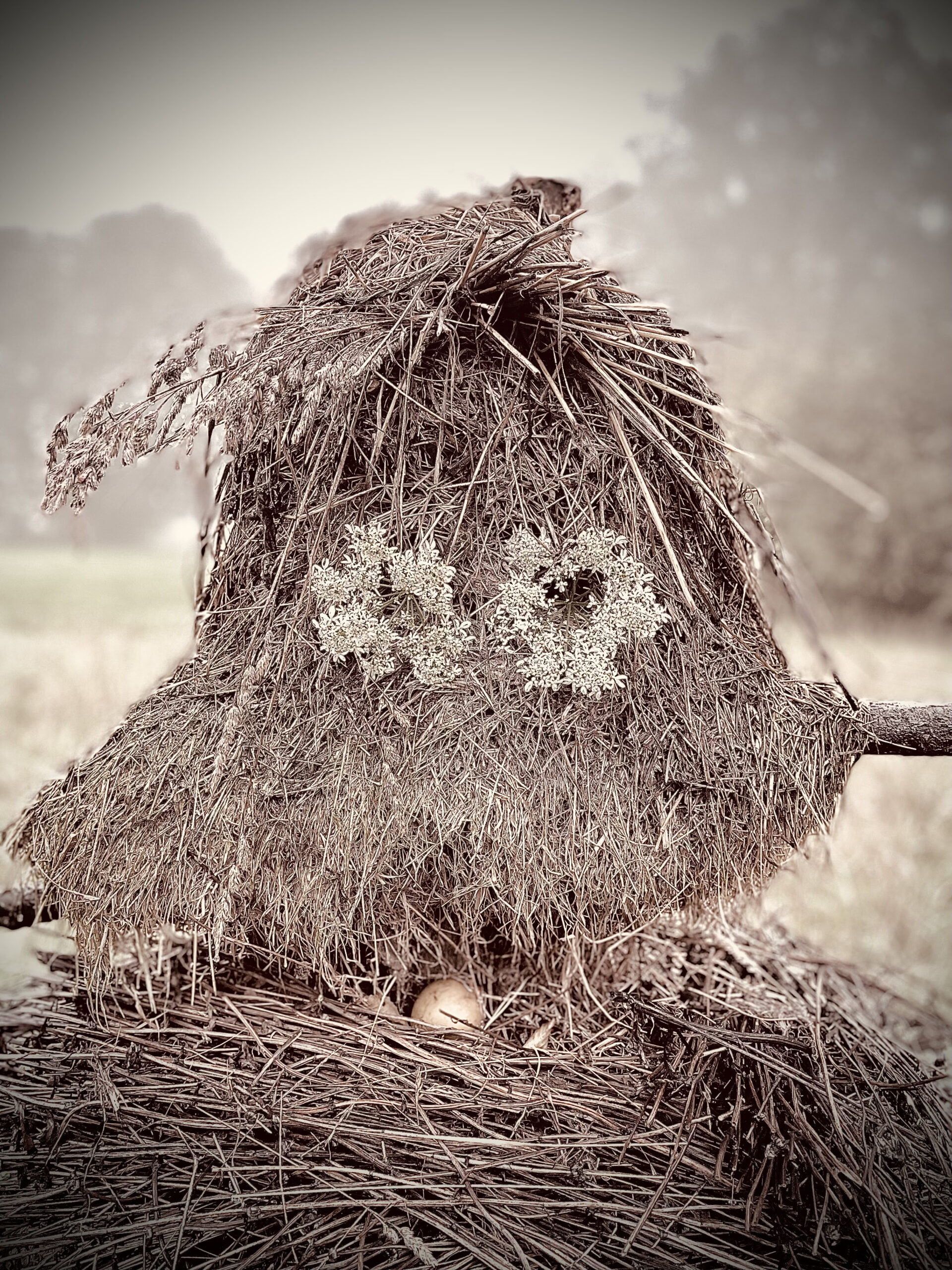
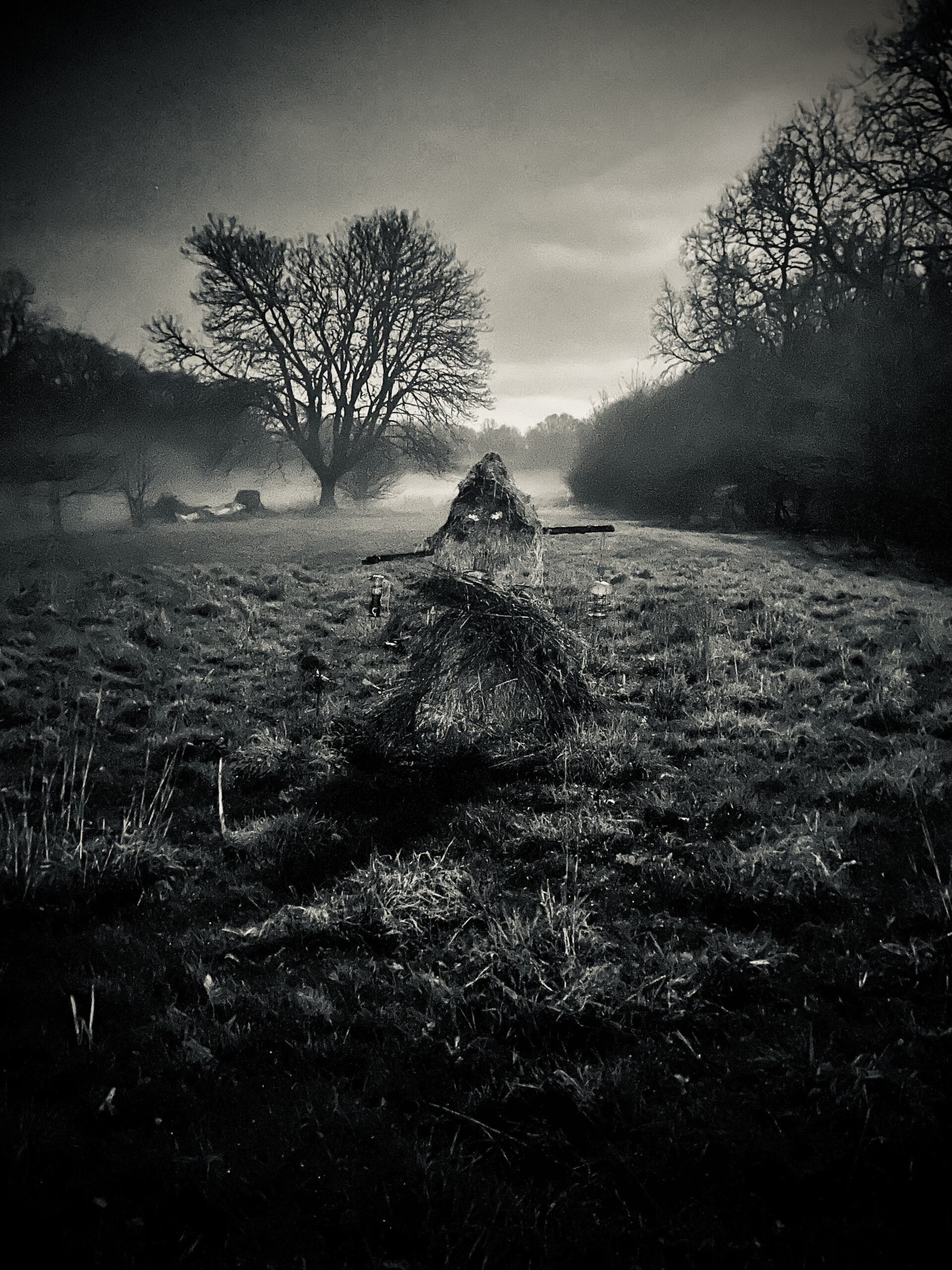
Claxton’s installations are grim totems of the land, dark presences gazing at us with watchful eyes from across the fields. They exhibit a quiet, dark ambient tone, capturing attention while simultaneously blending into the environment from which they were born. By giving lifeless materials new life, the artist hints at cyclical ideas of death and rebirth, where energy is never truly lost. Simultaneously, he touches on themes of decay and corruption, positioning his humanoid installations as revenants from a different dimension, trespassing into our own.
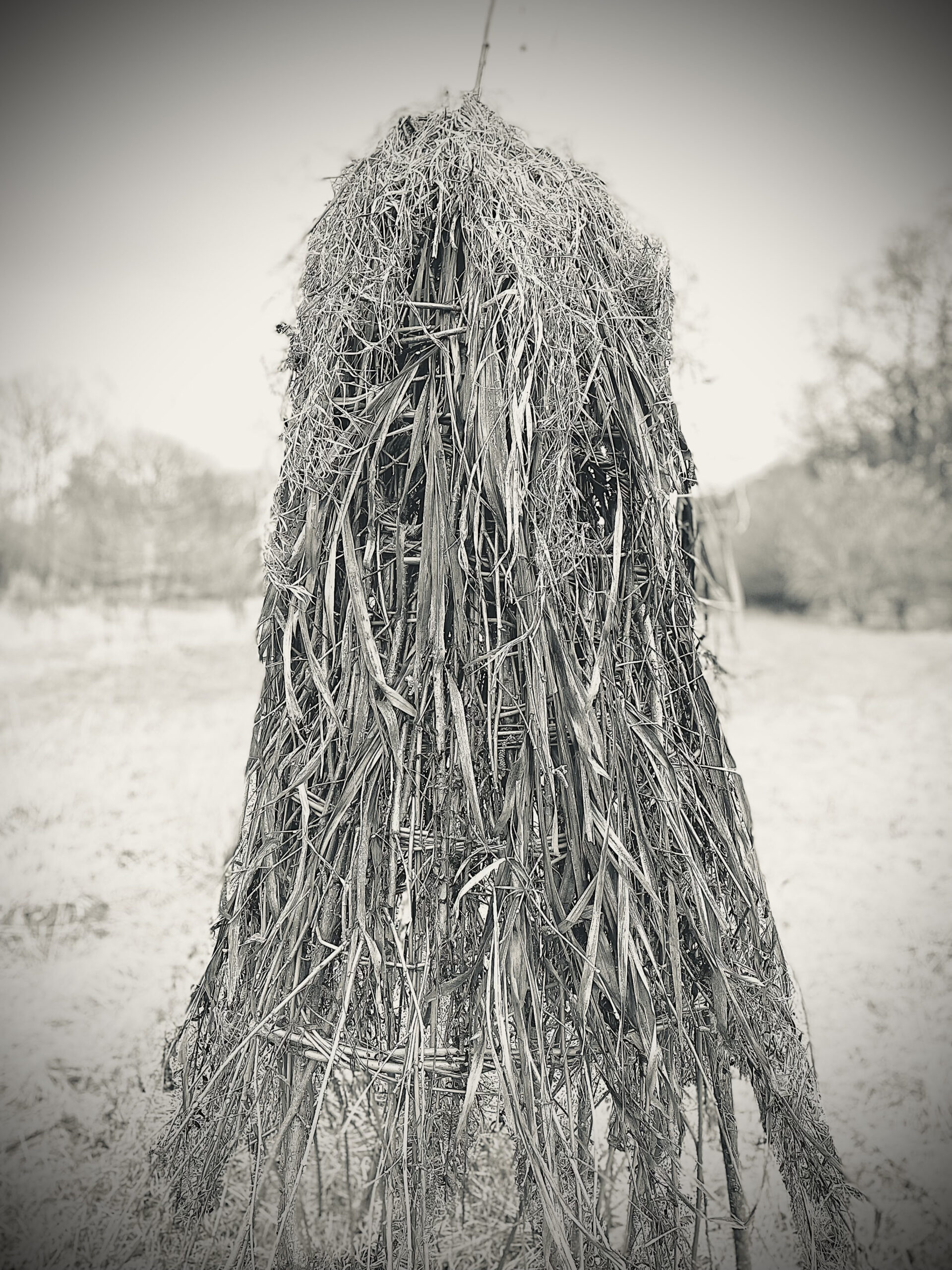
Claxton’s images of hay installations bring to mind a neo-pagan religion of Wicca, as well as “chochoł”—a Polish word of double meaning. “Chochoł,” which can be loosely translated as “The Strawman,” is used to describe a structure made of straw placed over delicate plants in winter to protect them from the cold. It is also the name of a mystical fantasy character that draws heavily from folklore and appears in the 1901 play “The Wedding” by Stanisław Wyspiański.
According to folk beliefs, offending the Strawman would result in being tricked by him. In the mentioned play, this character is insulted and casts a spell on the wedding guests, putting them into a sleepy trance, preventing them from joining the uprising against oppressors. Therefore, Chochoł became a symbol of necrosis, indecision, passivity, and dormant vegetation.
In this project, Claxton focuses on wilting, death, and decomposition, giving them a safe space and reminding the viewers that they are an organic part of life. Even the most passive and dormant, even dead, elements of nature are there to complete the picture and close the circle, making sure all stays connected.
Read our “Roots” issue in full
The new theme, born as usual from what the submitted works held in common, is “ROOTS.” Within its pages, we present the artworks, creativity, and inspiration of 60 visual artists and writers from 21 countries around the world. Their diverse voices come together around a shared exploration of the return to where one belongs, the invisible threads of tradition that shape identity, and the ongoing reconnection with nature, others, and oneself.


We’re a team of writers using our craft to spotlight art in its most honest form. RAWGUE. started as a bi-monthly editorial experiment where each issue’s theme is dictated by the submitted work, thus removing editorial bias from the equation and preserving a more raw approach. We focus on all forms of poetry: written, photographed, painted, drawn, and filmed.

