
From Australia, we present a project titled ‘Bogong, Pigmy, Sallee, and Sallow: Critical Relations,’ created collectively by three artists: Clare McCracken, Heather Hesterman, and Andrew Ferris.
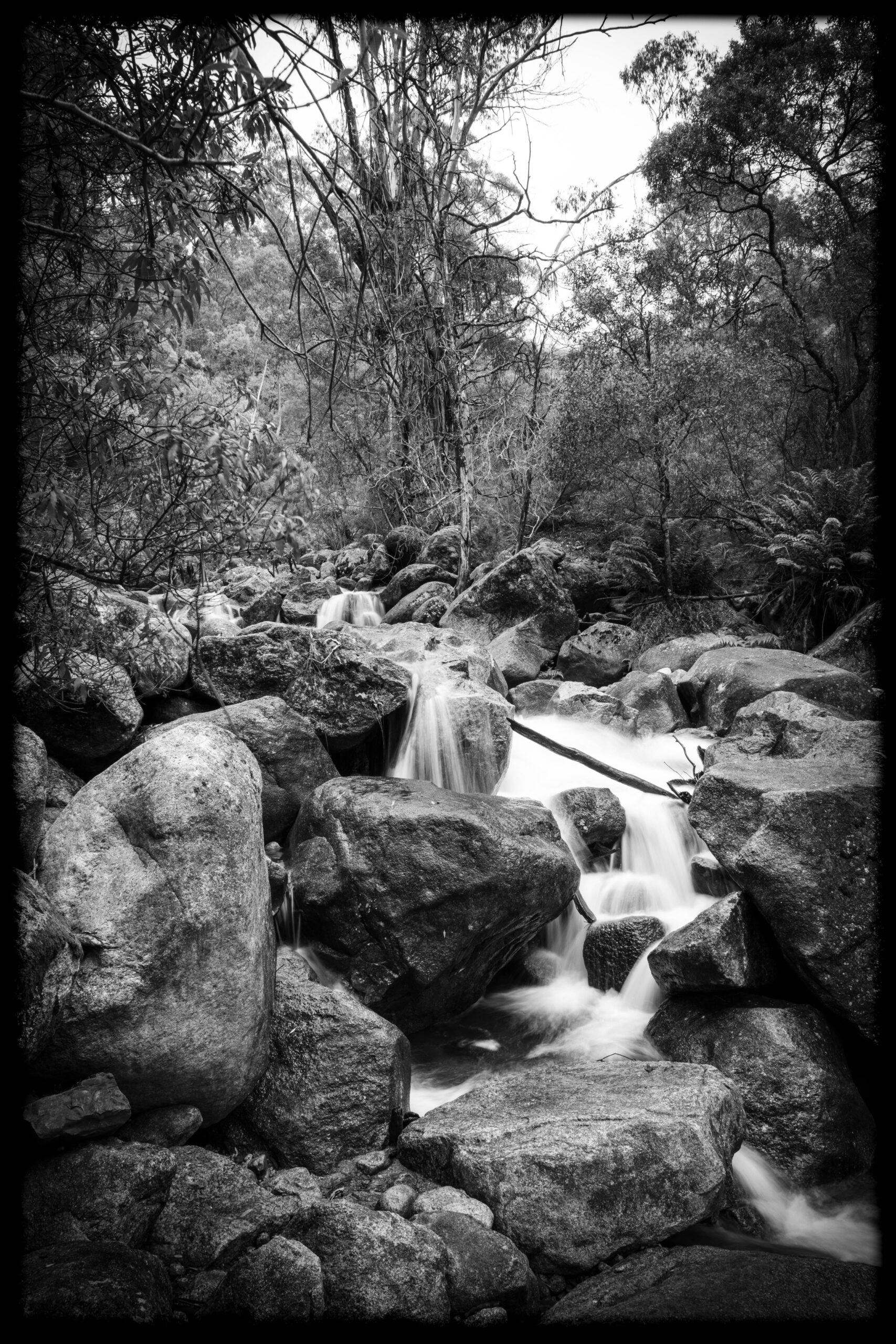
Their work has a complex historical, geographical, and natural background. This particular series of photographs focuses on depicting Eurobin Falls on Mount Buffalo in Victoria, Australia. The artists consciously erase their own presence from the images, moving the attention towards the place itself, its primal wisdom and experience.
The presented body of work can be experienced in two ways. It is inextricably linked to the place it comes from and presents; therefore, for anybody emotionally connected to Australia and its past, it undoubtedly has a level of insight that cannot be fully grasped by a “stranger.” Which is profoundly ironic, given the very dynamic and polarizing definition of “strangers” in the continent. The other way is to simply acknowledge the aesthetic value of the images that show us a little part of the world through the lens of locals.
That being said, McCracken’s, Hesterman’s, and Ferris’ work touches the very core of art’s mission and impact. It can introduce us to something we don’t know, confront us with the uncomfortable realities of life, show us the beauty of the world, and awaken our curiosity.
The collaborative series is, above all else, a tribute that the artists wish to pay to the Australian Indigenous peoples and, secondarily, a tribute to nature and the natural habitat itself, for which the Aboriginal and Torres Strait Islander peoples acted as “First Custodians” prior to colonization.
The series tells a visual story of past and present, of honor and sacrifice—of putting one’s work and life in the service of something grander and more important than one’s own existence. The fact that the series is collaborative in itself evokes this same idea of communion and collective contribution to a higher purpose.
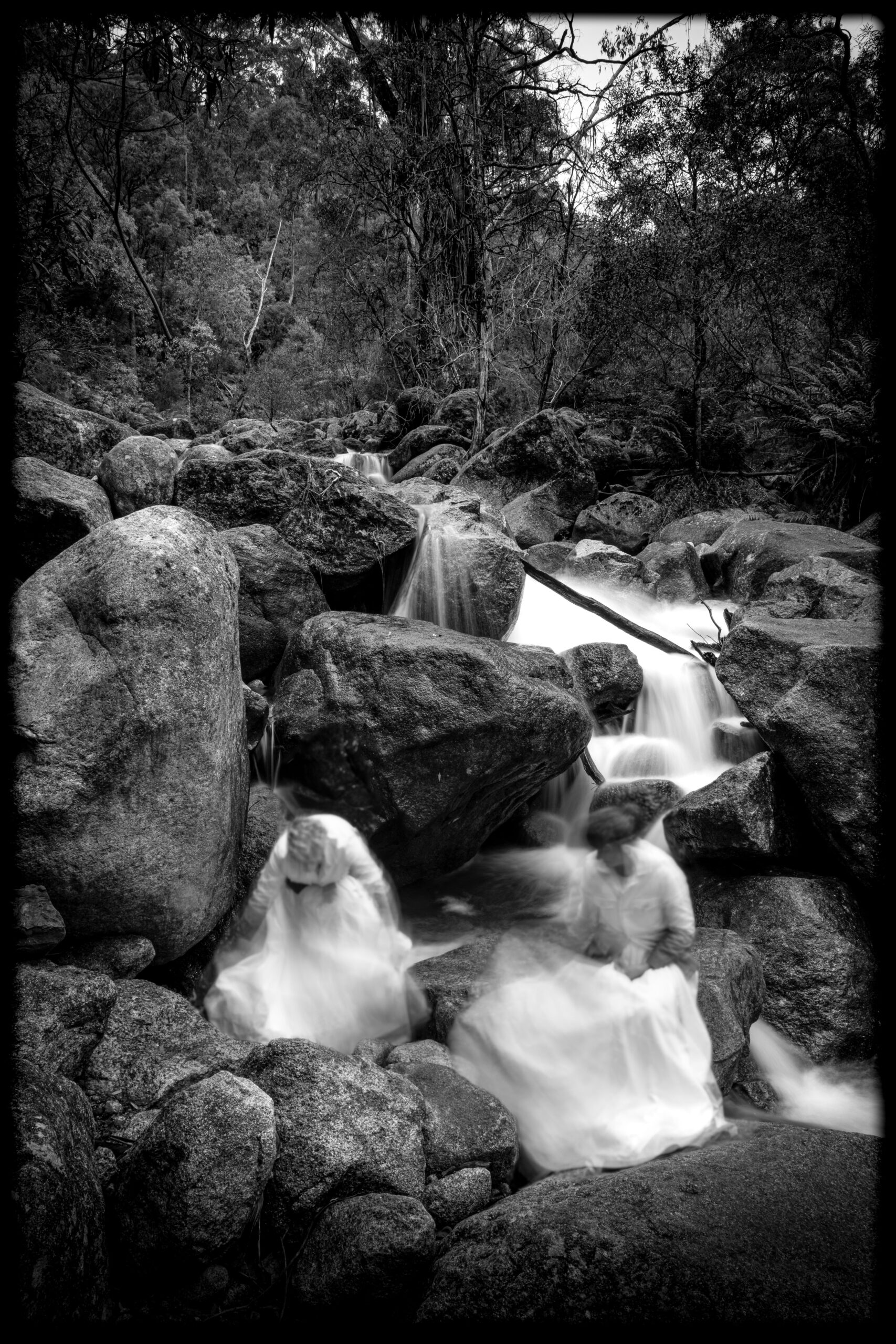
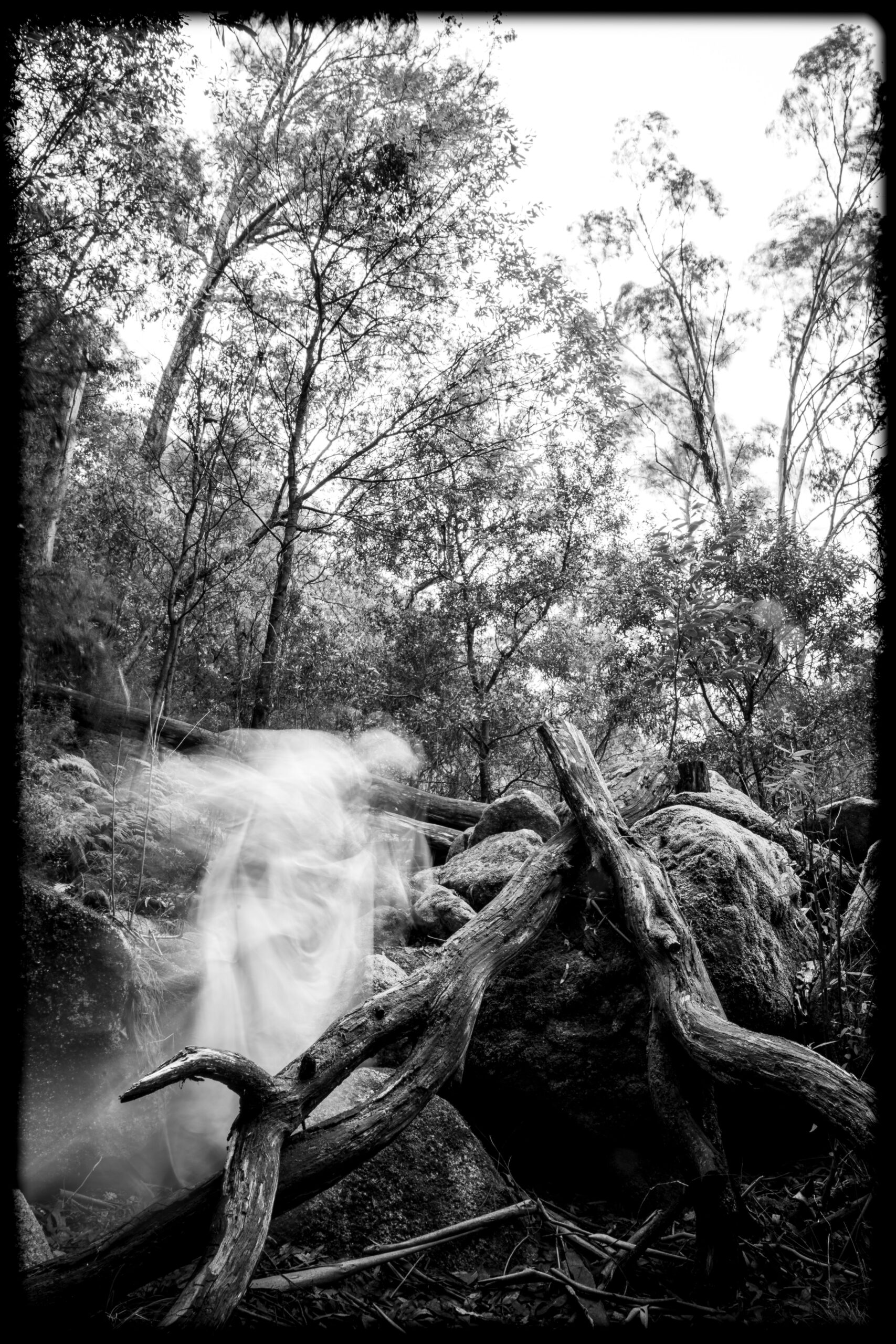
Through this well-conceptualized project, the photographers “haunt” the mountain through an eerie use of camera movement, hinting at the ancestral “ghosts” of the First Custodians. McCracken, Hesterman, and Ferris become unseen guardians of a culture they would do anything to protect, regardless of whether they belong to it or not. In their humility, they still refer to themselves as “the settlers,” aware of their position but deeply respectful of the land they now inhabit and the people who inhabited it before them. They now become the custodians.
Artists’ Note:
“Eurobin Falls is one of the most photographed sites on Mount Buffalo in Victoria, Australia. It features prominently in historical imagery and on Instagram today. In this work, the artists use movement and the camera shutter to erase themselves—settlers—from the heart of the photo, making room for other histories, futures, and the mountain’s non-human companions.
Mount Buffalo is a site of critical relations that have been impacted by colonization and climate change. Formed approximately 420 million years ago, the mountain’s rocks have witnessed these relations form and begin to crumble. Long after the settlers’ departure, the rocks will remember the First Custodians of the Mountain and its name before the Australian explorers Hume and Hovel likened it to a yoked buffalo in 1824. They will also remember the critically endangered Bogong moth and the pygmy possum that eats it; the Buffalo sallee and sallow, gum trees and wattles endemic to the mountain that are not found anywhere else in the world and that rely on cool temperatures and pollinators like the pygmy possum for survival.
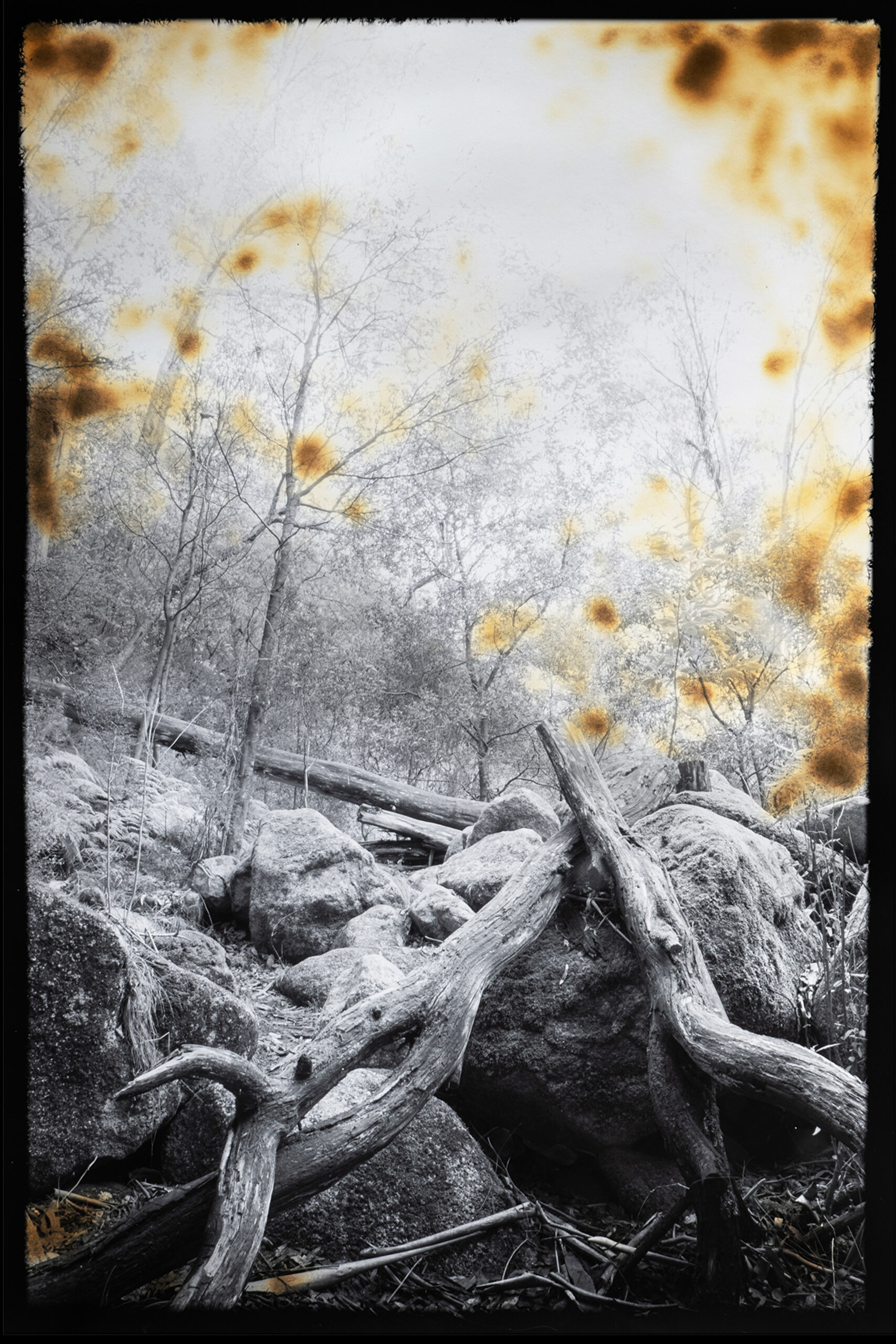
The rocks of Mount Buffalo, moving skyward by a tenth of a millimeter each year, will remember the fast violence of colonization and the slow violence, as Rob Nixon has described it, of climate change until they crack, fragment, and roll down the mountain. The final print in this series has been exposed to extreme heat—equivalent to the heat of an Australian bushfire.”
Read our “Roots” issue in full
The new theme, born as usual from what the submitted works held in common, is “ROOTS.” Within its pages, we present the artworks, creativity, and inspiration of 60 visual artists and writers from 21 countries around the world. Their diverse voices come together around a shared exploration of the return to where one belongs, the invisible threads of tradition that shape identity, and the ongoing reconnection with nature, others, and oneself.


We’re a team of writers using our craft to spotlight art in its most honest form. RAWGUE. started as a bi-monthly editorial experiment where each issue’s theme is dictated by the submitted work, thus removing editorial bias from the equation and preserving a more raw approach. We focus on all forms of poetry: written, photographed, painted, drawn, and filmed.

