
Experimental photographer from Greece, Nasos Karabelas, returns to our magazine with RAWGUE. Interview, as part of our RAWGUE. Dialogue segment.
“The human body is just the starting point.”
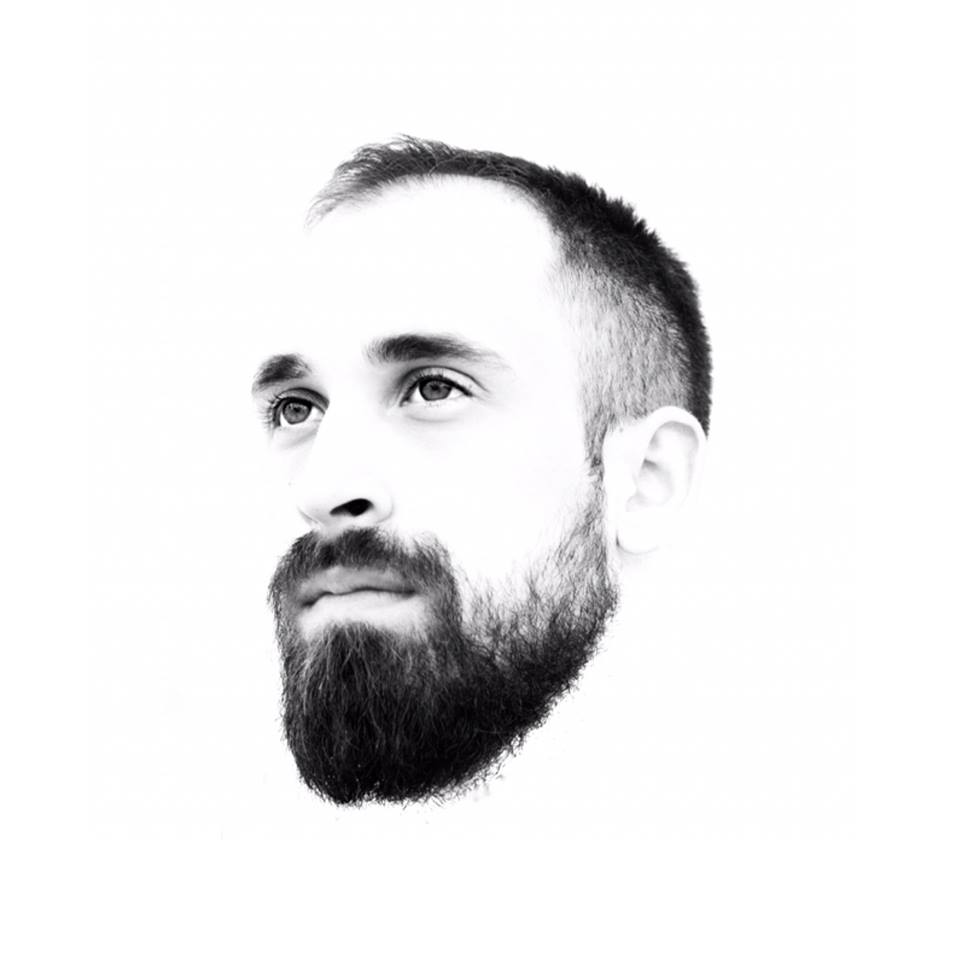
RAWGUE.: Hello Nasos, we are so glad to have you as a guest in our RAWGUE. Dialogue. Could you introduce yourself to our readers?
Nasos Karabelas: My name is Nasos Karabelas, and I’m a fine art photographer based in Athens. I was born in Pyrgos in 1992, and my work focuses mainly on experimental photography and the human body. I’m especially interested in how movement, distortion, and long exposure can change the way we perceive the human figure. Through these techniques, I try to create images that feel less literal and more emotional or symbolic, giving familiar forms a different meaning and presence.
You describe yourself as a self-taught artist, and you mention that your photographic journey started seven years ago. What is your background and how did artistic discovery appear in your life?
I consider myself a self-taught artist because everything I learned came through personal exploration and experimentation. Art was always present in my life in some way. As a child, I remember feeling a strong fascination whenever I came across a painting, a film, or any kind of artistic expression. I was naturally drawn to images and imagination, even before I fully understood why.
The real turning point came when I was around 16 or 17 years old. One day, while searching through some old VHS tapes at home, I found a copy of “The Blood of a Poet” by Jean Cocteau. I played it without really knowing what to expect, and by the end of it I felt completely changed. The black-and-white imagery, the surreal atmosphere, and the existential feeling of the film had a huge impact on me. It opened a door to a completely different artistic world and stayed with me ever since.
Part of your portfolio is film making. You have produced short films and directed a feature film titled “Osmosis” in 2016. Could you tell us more about this project and your film making experience? Can we expect more such projects from you?
“Osmosis” was created as part of my thesis project, which focused on the creative use of sound in cinema. The film explores questions that mainly reflect my own existential concerns but also the everyday condition of modern people and the emotional distance that often exists in contemporary life. Rather than trying to provide clear answers, the purpose of the film was to create questions and encourage the viewer to reflect and interpret the experience in their own way. Atmosphere and sound played a very important role in shaping that feeling throughout the film. Film making was a very
important creative experience for me because it allowed me to combine image, movement, sound, and narrative into a single form of expression. Even though cinema still interests me deeply, at the moment there are no plans for a new film project.
“One day, while searching through some old VHS tapes at home, I found a copy of ‘The Blood of a Poet’ by Jean Cocteau. I played it without really knowing what to expect, and by the end of it I felt completely changed.”
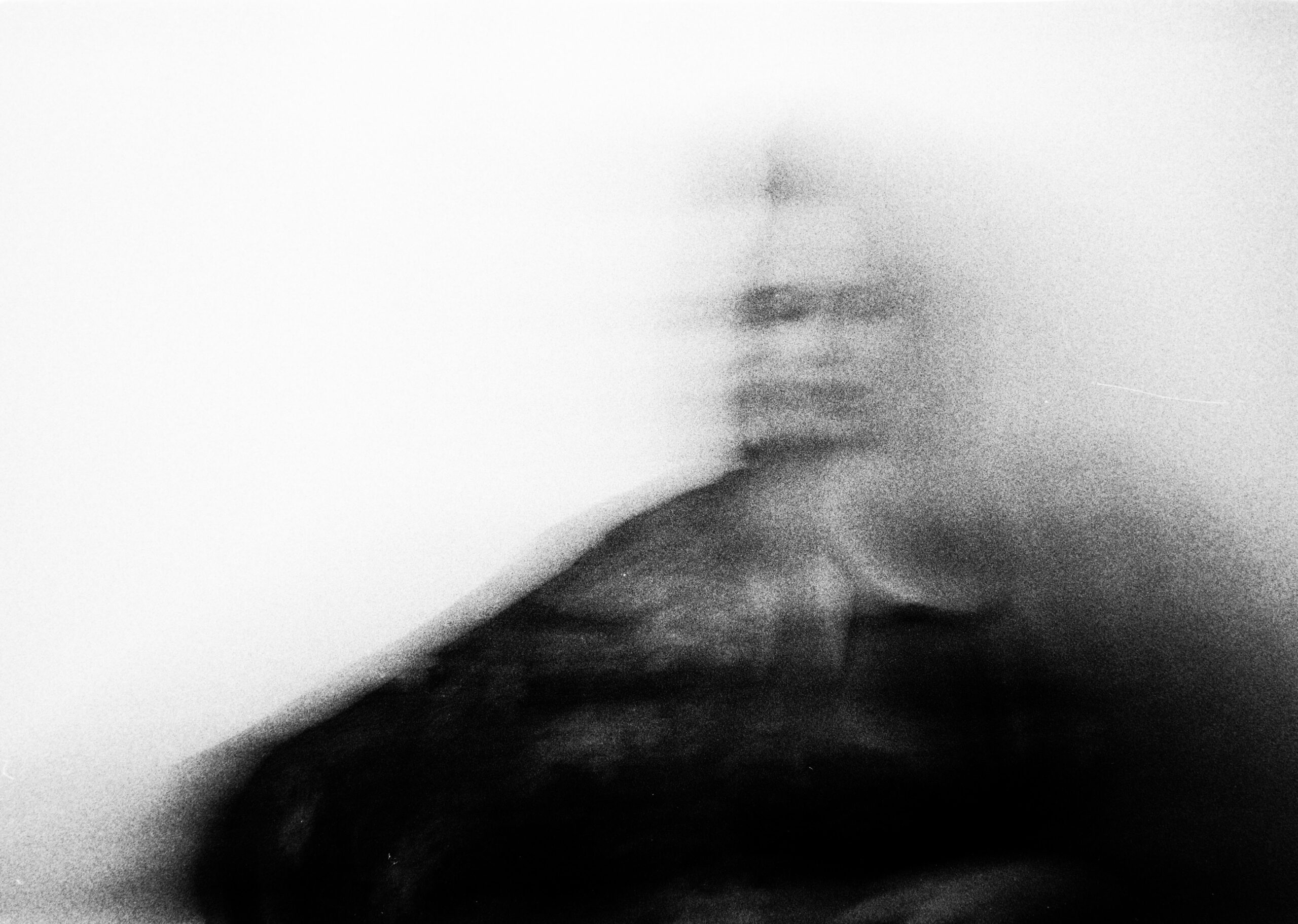
Your photography style is definitely distinct and hauntingly ambiguous. Why is it that this particular long exposure and grain technique is best suited for your artistic expression? Have you experimented with different other styles?
For me, long exposure and grain are not just aesthetic choices; they are tools that help me translate a specific emotional condition into an image. I’m interested in movement and instability, and long exposure allows me to dissolve that stability and create something more fluid and open to interpretation. Grain adds a physical texture that feels closer to memory or sensation rather than a clean visual record. It removes a certain clarity and makes the image feel more fragile and less literal, which is important for the kind of ambiguity I’m aiming for. I have experimented with other approaches, but I always return to these methods because they feel the most aligned with how I experience and think about images.
The titles of your photographs are simply “Man” or “Woman” with an assigned number. Such de-personalization can serve multiple purposes. Is it an anonymization or generalization tool? Or perhaps both? Or perhaps something else entirely?
What matters most is giving the viewer the possibility to experience the work as clearly and openly as possible, without being guided toward a specific interpretation. I try to avoid elements that could direct the viewer’s thoughts toward a fixed meaning before they have the chance to form their own emotional or personal connection with the image.
That is why I don’t consider titles to be especially important in my work. A title does not necessarily have to explain or even relate directly to the image itself. However, since artworks are usually expected to have titles, I chose to use simple titles such as “Man” or “Woman” followed by a number. In a way, this approach removes unnecessary information and keeps the focus on the image and the experience of the viewer rather than on predefined meanings.
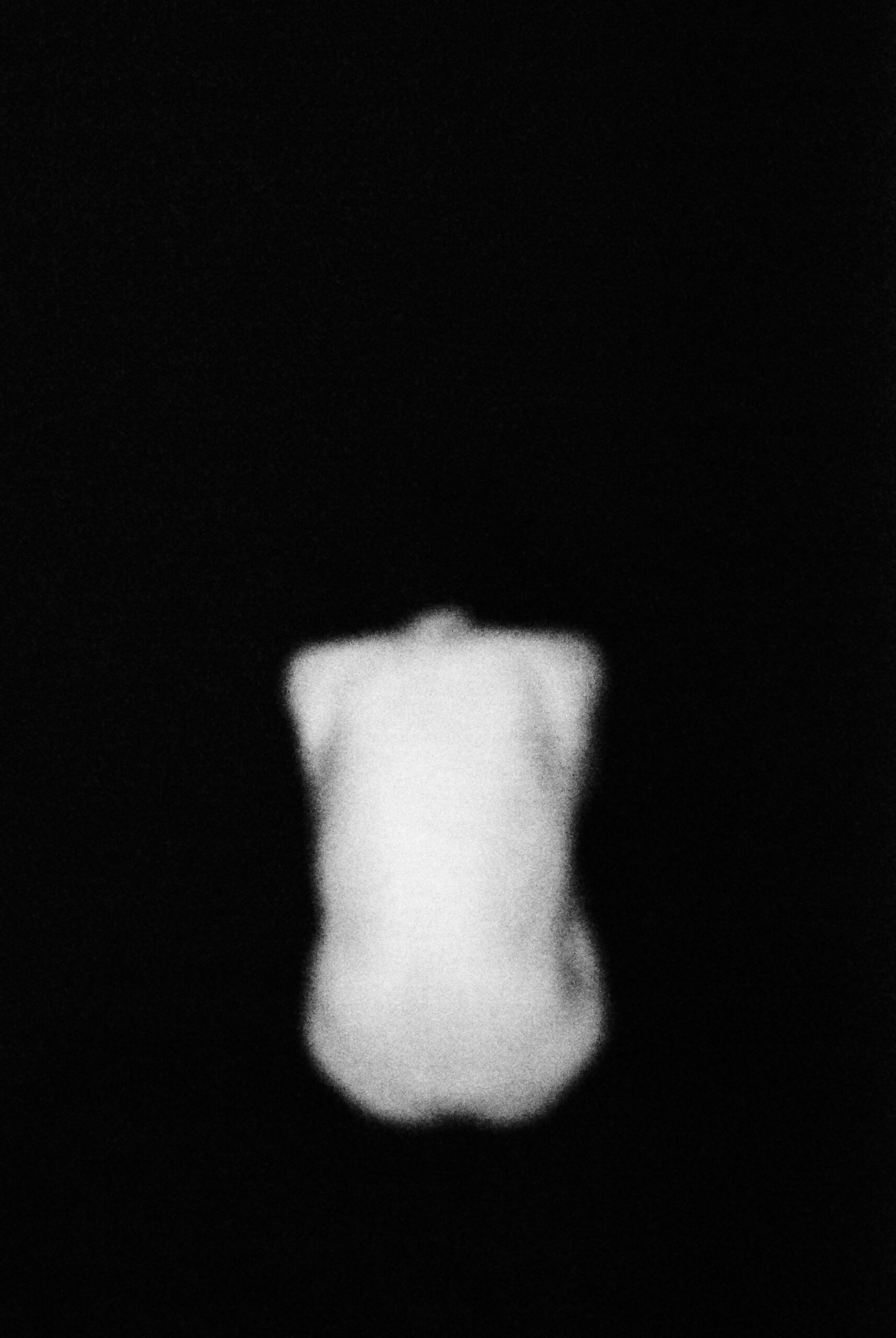
The main focus of your photography is “the possibility of deformation of the human body.” Your work transcends the visual depiction of a traditionally understood portrait and ventures into subjects’ psyches, dispersing them and merging with the background. Why is it that the human body became the main object of your experimentation?
What interests me most is capturing the human body in a different way, so in that sense my work is still very human-centered. In my photographs, both bodies and portraits are transformed into something else, into forms that often differ significantly from their original physical presence.
Each image becomes its own entity, carrying a specific emotional or psychological state. This inner condition is what drives the work for me. It’s less about documenting the body as it is and more about using it as a medium to express something psychological and deeply human.
There are two dominant color schemes within your portfolio—monochrome and shades of red. What is the reason behind this particular choice?
The choice between monochrome and red was never strictly conceptual at the beginning, but rather something that developed intuitively over time through my practice.
Monochrome allows me to focus on form, light, and gesture without the distraction of color. It strips the image down to its essentials and emphasizes structure and emotion in a more direct way. Red, on the other hand, carries a different kind of intensity. It introduces a physical and emotional weight that feels closer to tension, energy, or even discomfort. It became a color I returned to whenever I wanted the image to feel more visceral or psychologically charged. In the end, both approaches serve the same intention in different ways: one reduces, and the other intensifies.
“Long exposure techniques create a kind of distance or veil, which paradoxically makes people more open.”
The style of portraiture you are most known for requires vulnerability, even though the subjects are usually behind the veil of distortion. What is your process and approach to ensure such openness from your subjects?
My process is quite simple, and it relies mostly on trust and time. Before I even start shooting, I try to make sure the subject feels comfortable in the space and with the idea that there is no expectation to “perform” in a traditional portrait sense. I usually avoid giving too much direction, because I want their natural presence to come through rather than a constructed pose. Long exposure techniques create a kind of distance or veil, which paradoxically makes people more open. When the subject feels less “exposed” in a literal sense, they often relax and let go of control. That’s usually when more honest or vulnerable moments appear.
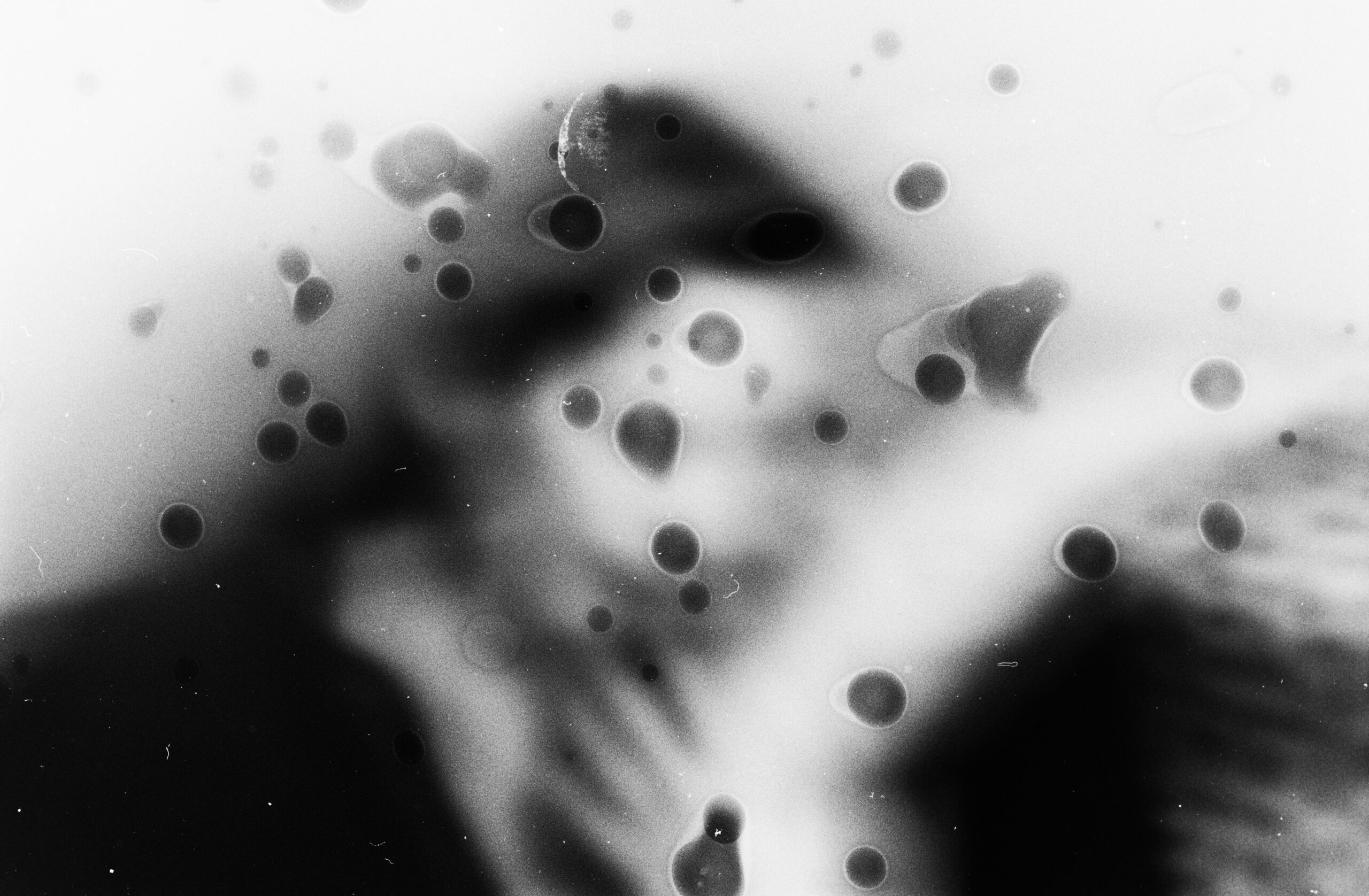
Your works appeared in a collection, “Inspired by Man Ray,” an experimental surrealist photographer. What are three other major influences (photographers, projects, or currents) you feel the closest to?
One of the photographers I feel very close to is Antoine d’Agata. I really admire the way he approaches the human body. His images feel very raw, intense, and deeply human, and they had a strong influence on how I think about photographing physical presence and vulnerability.
Beyond photography, I’ve also been strongly influenced by painting, especially the work of Francis Bacon. The way he deforms the human figure while still preserving emotional truth is something I find very powerful and closely aligned with my own visual interests. Another important influence is Man Ray. I’m very interested in his experimental approach to analog photography and darkroom processes. His way of treating the medium as something open to manipulation and chance is something I’ve been exploring more myself recently, and it continues to influence my work.
“One of the photographers I feel very close to is Antoine d’Agata. […] Beyond photography, I’ve also been strongly influenced by painting, especially the work of Francis Bacon.”
Is there any particular photography technique or artistic current that you would like to explore?
Lately I’ve been working more with analog film. I find it a very liberating medium, with a lot of possibilities in terms of experimentation and process. There’s something about its unpredictability and physical nature that really interests me. I also feel it aligns very naturally with my own aesthetic identity and the way I approach image-making.
What do you think your work is ultimately trying to preserve or capture?
I think my work is trying to preserve moments of emotional presence. Not in a documentary sense, but more in terms of internal states like tension, vulnerability, stillness, or psychological drift. The human body is just the starting point. What I’m really interested in is what lies behind it and how that can be translated into an image without being fully defined or explained.
Read our “Roots” issue in full
The new theme, born as usual from what the submitted works held in common, is “ROOTS.” Within its pages, we present the artworks, creativity, and inspiration of 60 visual artists and writers from 21 countries around the world. Their diverse voices come together around a shared exploration of the return to where one belongs, the invisible threads of tradition that shape identity, and the ongoing reconnection with nature, others, and oneself.


We’re a team of writers using our craft to spotlight art in its most honest form. RAWGUE. started as a bi-monthly editorial experiment where each issue’s theme is dictated by the submitted work, thus removing editorial bias from the equation and preserving a more raw approach. We focus on all forms of poetry: written, photographed, painted, drawn, and filmed.

