
Sonia Poirot is a Switzerland-based photographer who explores the notion of interference between seemingly antonymic concepts, creating minimal visual oxymorons that can be perceived as intrinsic diptychs of the same idea—sort of like two faces of the same coin.
Through a meditative, carefully curated vision and a psychologically charged approach, the artist succeeds in delivering beautifully crafted pieces that explore the duality of both inner and outer worlds.
“I am committed to the plurality of forms of encounter,” Poirot states. It is here that the rapport between the human and the natural occurs: the relation between the body and the territory, reality and fiction, or art and life. These ideas are brought together in an ongoing attempt to blur the lines between them, with the artist serving as a bridge that homogenizes them.
“In my approach,” she says, “I deliberately adopt an animal-like posture, often close to the ground, in shaded areas where human, vegetal, and mineral bodies brush against one another and where materials accumulate, overlap, and transform.”
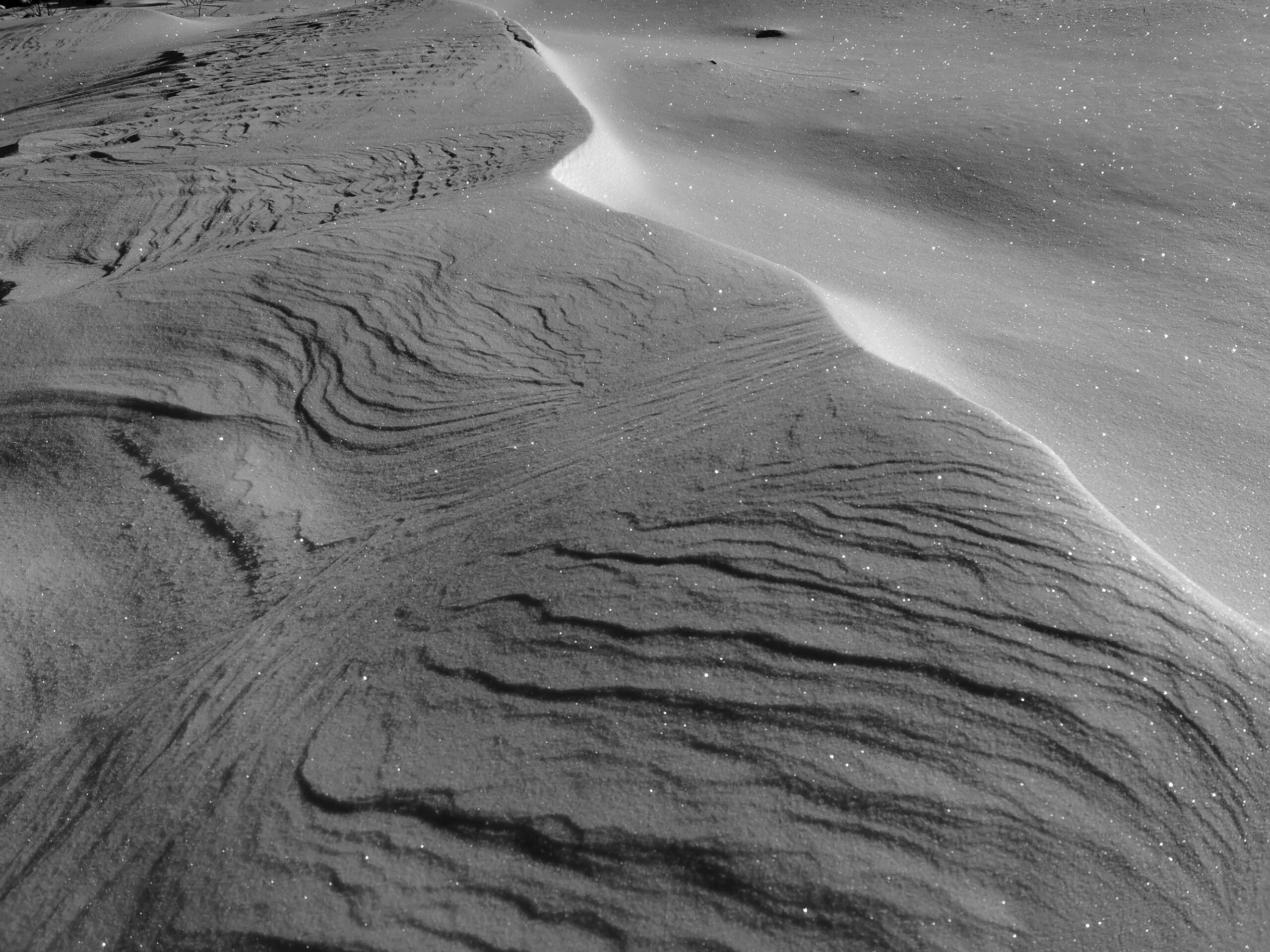
Also interesting is the fact that, in her pursuit to become a better conduit, the artist developed a “method-acting” technique, building a connection with nature by earning its respect through behavior—much like anthropologists do when they want to earn member status within a gorilla tribe. “By slipping beneath branches, between stones, and into the hollows of the earth, I adopt a gaze that is no longer strictly human but instinctive, sensory, and almost furtive,” she concludes.
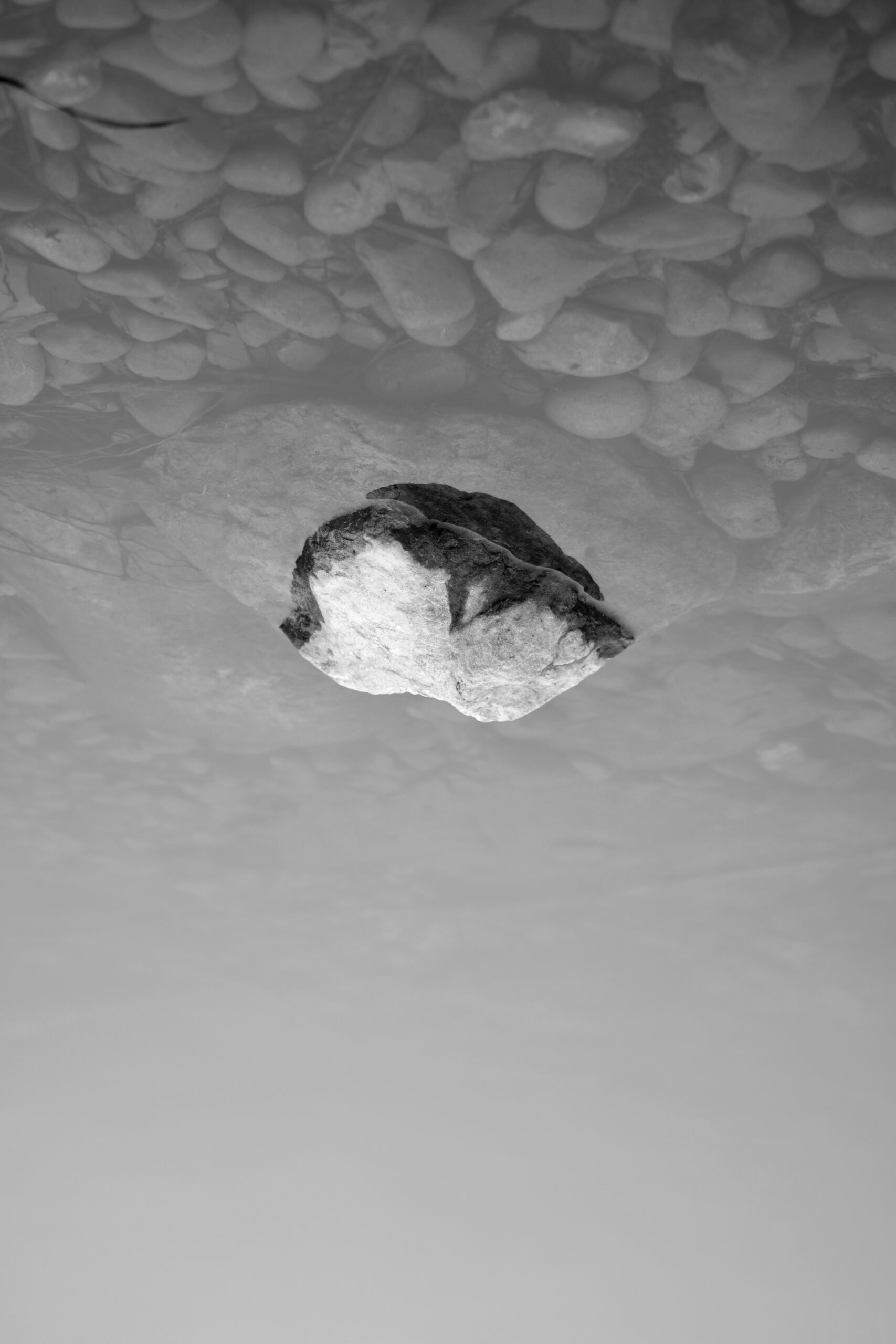
Poirot strives for a deep understanding of nature, bordering on elemental symbiosis. Her camera functions as a microscope, allowing the artist and the viewer to extrapolate the meaning to the images. “Each photograph functions like a sample, an excerpt from a broader and undefined territory, playing with the ambiguity of textures and scales,” the artist explains.
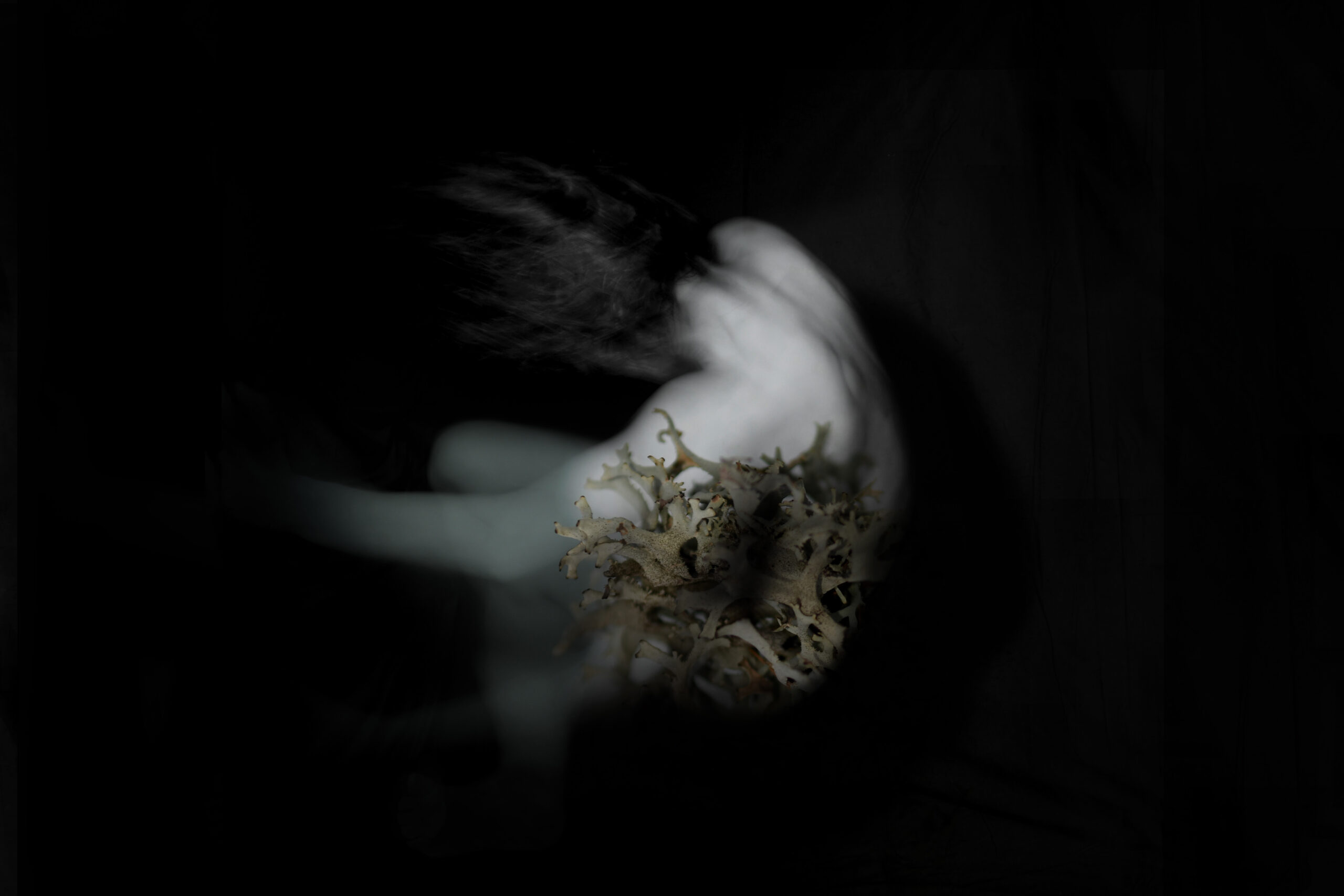
There is a methodical, forensic-like approach to Poirot’s work that “draws equally from bodily experience and from scientific inquiry, examining details as one would study a terrain, a skin, or a living sedimentation. Materials become clues.” The portfolio is a visual representation of Sherlock Holmes’ statement: “From a drop of water a logician could infer the possibility of an Atlantic or a Niagara without having seen or heard of one or the other.”
Poirot is searching for connection with nature through a “missing” link that is right there, available at all times—the body—”sometimes visible, sometimes merely suggested—appears as a natural extension of the landscape.” It is organic for artists to insert themselves into their work, and Poirot goes one step further—inserting herself into the world to create art.
Read our “Aberration” issue in full
The 31 artists featured in RAWGUE. Magazine’s 5th issue stray from the expected, taking untrodden paths, contemplating imperfection, solitude in its many forms, and the ongoing process of self-acceptance. Through shifting perspectives, their works explore what it means to look at oneself from the outside, as if through broken glass.


We’re a team of writers using our craft to spotlight art in its most honest form. RAWGUE. started as a bi-monthly editorial experiment where each issue’s theme is dictated by the submitted work, thus removing editorial bias from the equation and preserving a more raw approach. We focus on all forms of poetry: written, photographed, painted, drawn, and filmed.

